




Long-term Implants for local release
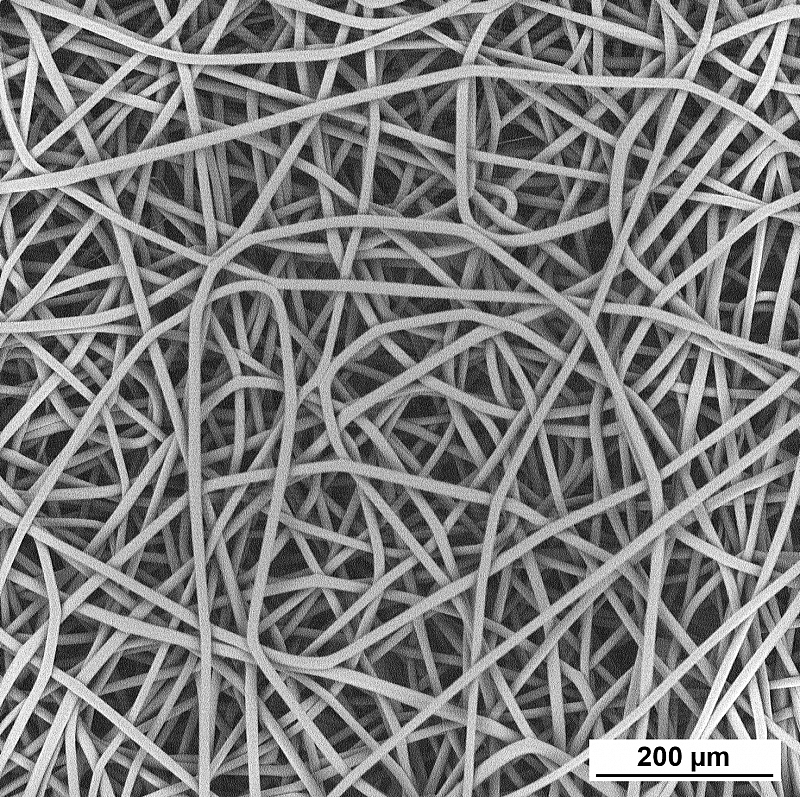
Research on long-term biomedical implants for local drug release focusses on the treatment of anatomical compartments that are poorly accessible via systemic administration. In such enclosed or isolated sites, achieving therapeutic concentrations through the bloodstream is often ineffective or may be associated with systemic side effects. Examples of such compartments include different segments of the eye or bone cavities—areas where physiological barriers limit drug penetration from the bloodstream. Additionally, well-perfused soft tissue can be of interest for advanced drug delivery systems that provide higher local drug concentrations while minimizing systemic drug exposure.
Polymer-based implantable systems enable sustained and localized drug release directly within the affected area, potentially improving therapeutic outcomes. Polymers can be engineered into a variety of device structures, such as rods, discs, films, meshes, or more complex structures resembling anatomical features or that are integrable. These polymer-based implants serve as diffusion barriers, enabling highly controlled, slow drug release over extended periods, thereby maintaining therapeutic levels locally without the need for frequent re-administration.
Key research questions in this set of projects focus on selecting suitable polymers for specific use cases, ranging e.g., from the need for, on the one hand, super soft materials to, on the other hand, load-bearing structures. Processing techniques include solvent-based methods such as solution casting, spin coating, spray coating, or electrospinning, as well as melt-based processing such as extrusion or melt-casting in special molds (created by machining or soft lithography), including those that resemble anatomic features. Computational tools, such as those used to predict solubility patterns of drugs and polymers, help streamline the development process.
Examples of research on implants from our previous work:
L. Unverzagt, O. Dolynchuk, O. Lettau, C. Wischke. Characteristics and Challenges of Poly(ethylene-co-vinyl acetate) Solution Electrospinning, ACS Omega 2024, in press, https://doi.org/10.1021/acsomega.4c01452
O. Altabal, C. Wischke, A. Lendlein. Design of Reservoirs Enabling Stress-Induced Sequential Release Systems. Pharmaceutics2022, 14(12), 2611; https://doi.org/10.3390/pharmaceutics14122611
D.C. Tuncaboylu, F. Friess, C. Wischke, A. Lendlein. A multifunctional multimaterial system for on-demand protein release. J Control Release, 284 (2018), 240-247. https://dx.doi.org/10.1016/j.jconrel.2018.06.022
C. Wischke, J. Weigel, L. Bulavina, A. Lendlein, Sustained release carrier for adenosine triphosphate as signaling molecule. J Control Release, 195 (2014), 86-91. http://dx.doi.org/10.1016/j.jconrel.2014.07.047
C. Wischke, A.T. Neffe, B.D. Hanh, C.F. Kreiner, K. Sternberg, O. Stachs, R.F. Guthoff, A. Lendlein, A multifunctional bilayered microstent as glaucoma drainage device, J Control Release, 172 (2013), 1002-1010.https://pubmed.ncbi.nlm.nih.gov/24459692/